The switch that keeps your generator off the utility line
Automatic or manual, whole house or a short list of circuits. Isaac Garcia sizes the transfer switch to your service, pulls the permit and has it inspected before your generator ever carries the house.
What the switch is doing in there
A transfer switch decides where your house gets its power. On a normal day it connects your panel to the utility. When the grid drops, it disconnects the utility and connects the generator instead. Those two sources can never be tied together, and the switch is the piece of equipment that makes sure of it.
Without one, a generator wired into a panel can push power back out through your meter and onto the street. The equipment on the pole steps that 240 volts back up to distribution voltage, and the lineworker fixing storm damage a few blocks away has no reason to expect it. That is the whole reason the code treats this connection so seriously.
Most of the switches we put in go in alongside a new home standby generator. We also install them for people who already own a generator and want it connected properly, and for homeowners replacing an older switch that failed or no longer matches the panel. Whether the house is in Cheyenne, out by Burns or Carpenter, or across the state line in Fort Collins or Greeley, the work and the code behind it are close to the same.
Matched to your service
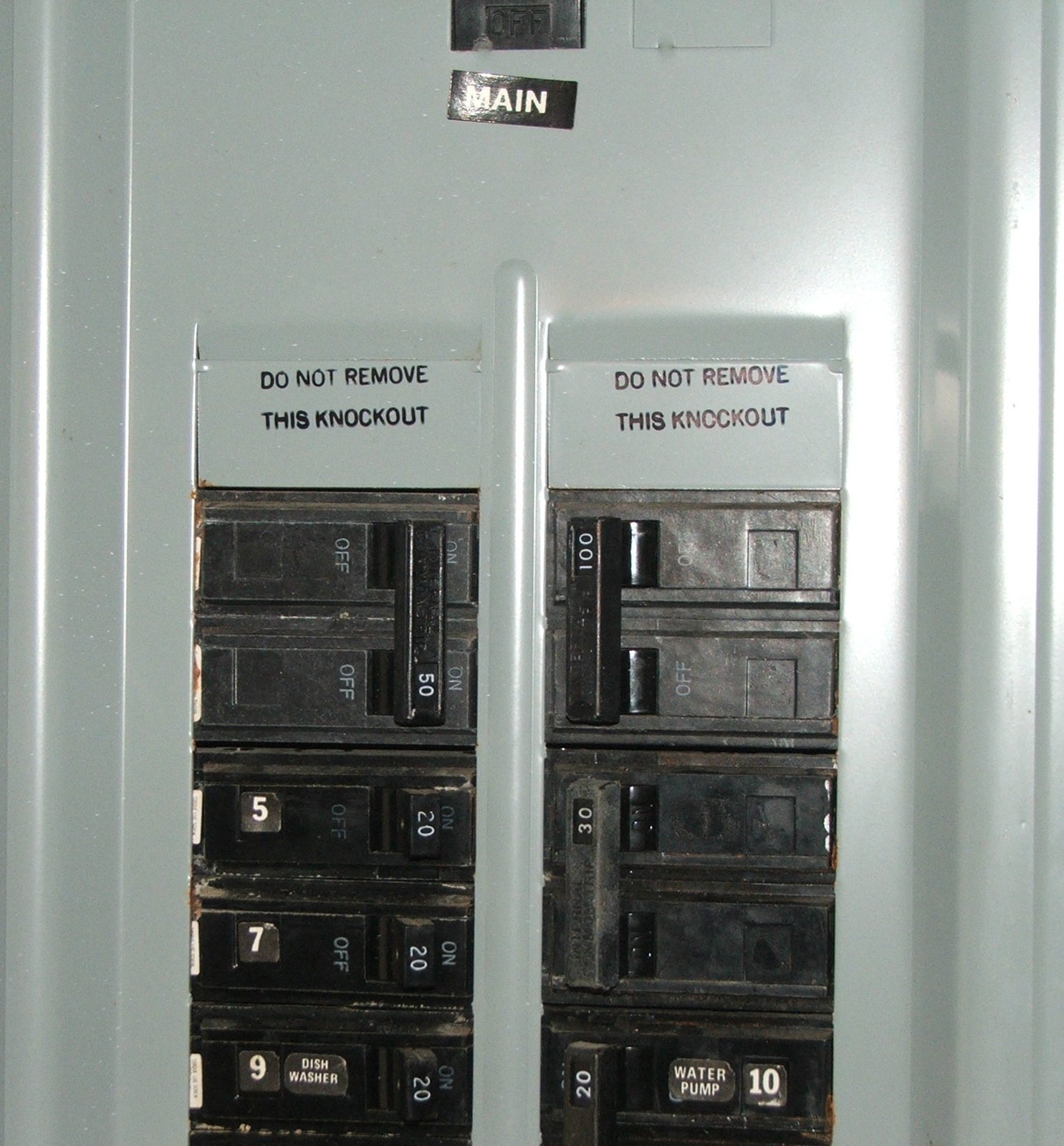
A 100, 150 or 200 amp service gets a switch rated to match, or a sub-panel design that stays inside what the generator can carry.
Isolated from the grid
Mechanical interlocking inside the switch means the utility and the generator can never both be connected at the same moment.
Permitted and inspected
Every switch goes through the electrical permit and passes inspection before it is trusted with the house.
Four decisions
Choosing the right switch for your house
Automatic transfer switch (ATS)
An ATS watches utility voltage around the clock. When the power drops, it signals a standby generator to start, waits for the engine to settle at steady voltage and frequency, and then moves the load over. When the utility comes back it waits again to make sure the power is stable, transfers back, and lets the generator cool down before it shuts off. It belongs with a permanently installed standby unit, and it is what makes the system work when nobody is home.
Manual transfer switch
A manual switch does the same isolation job, but a person throws it. It pairs well with a portable generator or a smaller standby unit where somebody is usually home and does not mind walking out to start the engine. It has fewer parts to fail, it costs less to put in, and it is easy to understand at two in the morning with a flashlight in one hand.
Service-entrance rated or load side
A service-entrance rated switch goes between the meter and your panel and carries the main disconnect for the house, so one switch transfers the entire service. That is the common choice for whole-house backup on a 200 amp home. A load-side switch sits after your main breaker and feeds either the whole panel or a separate sub-panel. Which one fits depends on where the meter sits and how much of the house you want running.
Whole house or essential circuits
Whole-house transfer means anything in the panel can run on the generator, so the generator has to be big enough, or a load manager has to hold back the big appliances until there is room for them. An essential-circuit design moves the furnace, the fridge, the sump or well pump, some lights and a few outlets to a small sub-panel, and only that panel transfers. For a lot of Cheyenne homes heated by a gas furnace, that route keeps the house warm on a much smaller generator.
Sizing to 100, 150 or 200 amps
The switch has to be rated for what it transfers. On a service-entrance design that means matching the service: a 200 amp house gets a 200 amp switch even when the generator is smaller, and load management keeps the generator from being overrun. On a sub-panel design the switch is sized to the sub-panel. Older houses with 100 amp services sometimes need a panel replacement or a full service upgrade first, and we will tell you that before the job starts, not halfway through it.
Code, grounding and the lineworker down the street
Article 702 of the National Electrical Code covers optional standby systems, which is what a home generator is. It requires transfer equipment that keeps the normal source and the standby source from ever being connected to each other, and it requires that equipment to be rated for the fault current it could see where it is installed.
The same article and the grounding rules around it decide whether the switch has to transfer the neutral. That point trips up plenty of do-it-yourself installs. Many portable generators bond the neutral to the frame. Connect one through a switch that does not switch the neutral, and the house ends up with a second neutral-to-ground connection, with current running on grounding conductors and metal piping where it does not belong. We check how your generator is built before picking the switch, and we set up the bonding to match.
Every transfer switch we install is permitted. Inside Cheyenne that means a city electrical permit and inspection. Outside city limits, and in Colorado towns like Fort Collins and Greeley, the permit goes to whichever agency has jurisdiction there. Isaac holds master electrician licenses in both Wyoming and Colorado, so the permit is pulled under his license and an inspector sees the work before it goes into service.
From the first panel check to the inspector’s sign-off
Look at the panel and the meter
We open the panel, read the main breaker and bus rating, note where the meter is, and talk through what you need running during an outage. If you already own a generator, we read its nameplate and check its outlet and neutral setup.
Settle the design and pull the permit
You get a written plan that names the switch, shows where it mounts and lists which circuits move. Once you approve it, the permit goes in and the parts get ordered. Questions at this stage are welcome; send them over before anything is installed.
Install day
Power is off for part of the day while we mount the switch, land the conductors and move the selected circuits. A typical load-side switch is a one-day job. A service-entrance swap also needs the utility to pull and reset the meter, and we coordinate that with them.
Pull the plug on purpose, then inspect
We shut off utility power at the main and watch the switch transfer under real load, then restore utility and watch it go back. After the inspection passes, we show you how to read the switch and what to do if it ever fails to transfer.
Questions homeowners ask about transfer switches
Do I need a transfer switch if I only run a portable generator?
Yes, if the generator is going to power anything through your panel. Extension cords run straight to appliances do not need one, but the moment a generator connects to house wiring, code requires a listed transfer switch or a listed interlock that keeps the utility disconnected. For a portable, a manual switch or an interlock kit is usually the simplest answer.
How long does an automatic transfer switch take to switch over?
A residential automatic switch waits a few seconds to confirm the outage is real, starts the generator, and transfers once the engine is up to speed. In practice the lights come back somewhere between ten and thirty seconds after the power goes out, depending on the generator and the delay settings.
Can you put a transfer switch on a 100 amp panel?
Often, yes. A 100 amp service can usually take a load-side switch or an essential-circuit sub-panel. What it cannot always handle is a whole-house design if the panel is full or worn out. We check the bus, the breakers and the open space before recommending anything.
Will any transfer switch work with my generator?
Most home standby brands pair with their own automatic switch, because the switch and the generator controller talk to each other. Manual switches and interlocks are more universal. Isaac works on the major home standby brands and will tell you which switch your generator was designed to run with.
Does a transfer switch need a permit in Cheyenne?
Yes. Connecting a generator to house wiring is permitted electrical work in Cheyenne and in the Colorado towns we serve. We pull the permit under Isaac’s master license, and the job is not finished until it passes inspection.
What happens if the switch fails during an outage?
Depending on how it fails, the house either stays dark while the generator runs, or stays on the generator after utility power returns. Worn contactors, failed control boards and loose terminations are the usual causes. We repair and replace switches, including ones we did not install.
Cheyenne and Northern Colorado
Get the switch right the first time
Tell Isaac what panel you have and what you want running when the power goes out. He will come look at it and give you a straight answer.
(307) 757-5553 Talk to IsaacServing Cheyenne, Laramie, Fort Collins, Greeley and the towns between • igarcia@moonlightelectricsolutions.com