Panel Upgrades for Fox Farm-College Houses Built Around 100 Amps
Service and panel upgrades for the established houses south of LCCC and the rentals around College Drive, sized for what the household plugs in today and what it is likely to add next.
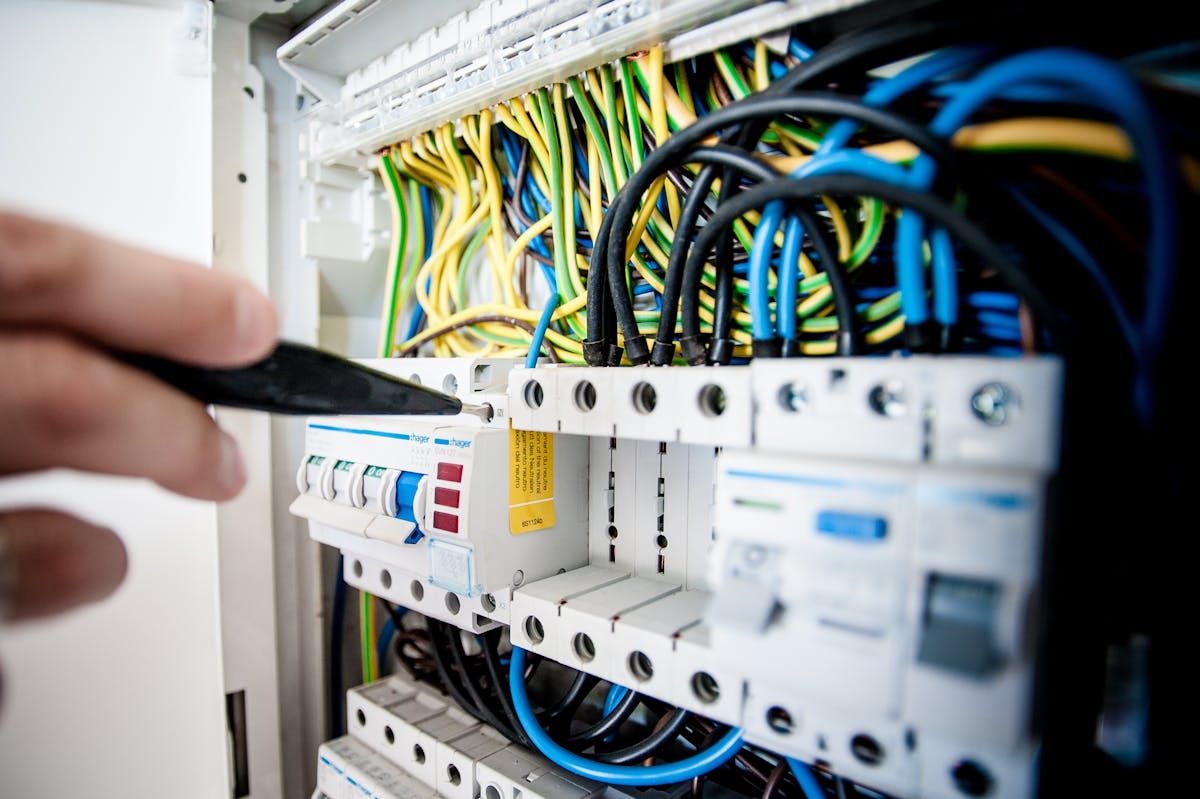
The 100-Amp Houses South of Campus
Drive the residential streets between Laramie County Community College and I-25 and you are looking at houses built between the 1960s and the 1990s. A lot of them still run on the electrical service they were built with, which often means 100 amps feeding a panel sized for a kitchen, a few bedrooms, a furnace blower and a television. That was a sensible house at the time. The families living in them now ask a good deal more of it.
The additions tend to arrive one at a time, which is why the panel catches people off guard. Central air goes in one summer. Somebody starts working from the spare bedroom, and the desk now holds two monitors, a printer and a space heater for January. A few years later the household buys an electric car and wants to charge it in the garage. Each change looks small on its own. Stacked on a 100-amp service, they leave very little headroom on a cold evening when the dryer, the oven and the heater all run at once.
The warning signs are ordinary ones. A breaker trips whenever two particular things run together. Lights dim when the air conditioner kicks on. Another electrician told you there was no room for the circuit you wanted. None of those mean the house is dangerous by itself, though each one deserves attention before you add anything else to the load.
A 200-amp service raises the ceiling on how much the house can run at the same moment. Your monthly bill still follows what you use, so the bigger service adds nothing to it on its own. It also gives the panel enough spaces for each new circuit to get its own breaker, which is what lets air conditioning, an office and a charger go in over the years without another round of rework.
Isaac starts every panel job with a load calculation, which is plain arithmetic on what the house has and what you plan to add. Sometimes the answer is that 100 amps is enough and the real problem is a crowded panel. Often it is a move to 200-amp service. Either way you see the numbers on paper before any equipment is ordered. The service across our whole area is described on the panel upgrade page.
Two Panel Names Worth Looking For
Federal Pacific and Zinsco panels turn up in older homes across Laramie County, and the houses near the college are no exception. Both brands were installed widely in their day. Federal Pacific breakers have a long record of failing to trip when they should, and Zinsco breakers have a reputation for loose connections at the bus that run hot. If you open the panel door and see either name on the label, call us before anyone adds a circuit to it.
We do not try to keep those panels going with replacement breakers. When we find one, the recommendation is a new load center, and we explain the reasons in plain terms so you can decide with the facts in front of you. Some owners first hear about it from a home inspector during a sale and want the swap done before closing or right after they move in.
The more common situation is less dramatic: a panel in decent shape that is simply full. Every space is taken, sometimes with tandem breakers squeezed in where single ones were meant to go. You want a circuit for a mini split, the microwave keeps tripping the counter outlets, or you need a 240-volt line for a charger, and there is nowhere to land it. A full panel can sometimes be relieved with a subpanel. When the service is small as well, upgrading both at once is usually the cleaner job.
Whatever is in there, we look before we recommend. Isaac Garcia holds a Wyoming master electrician license. If your panel has years left in it, that is the answer you get.
What a Panel Swap Involves Here
Load Calculation First
We add up heating, cooking, laundry, air conditioning and anything new you have planned, then size the service to match. That number decides between 200 amps and a reorganized panel, and you see it before committing to anything.
Meter and Service Entrance
Going from 100 to 200 amps usually means a new meter base and larger service conductors along with the panel. We coordinate the disconnect and reconnect with the utility so the house is dark for as short a stretch as the work allows.
Grounding and Bonding
A new panel tied to an old, corroded grounding electrode is only half finished. We check the ground rod connection and the bonding to water and gas piping, and bring both up to current requirements as part of the same job.
Spaces Left Open
We leave room on purpose. If a car charger, a hot tub or a shop circuit is on your list for the next few years, we lay out the panel now so adding it later is a short visit instead of another upgrade.
Garages and Workshops
Houses on the larger lots east and south of campus often come with a detached garage or shop. We run a feeder out to a subpanel there, so 240-volt tool circuits and proper lighting stop depending on an extension cord from the house.
Permit and Inspection
The permit comes from whichever authority covers your address, and we pull it and book the inspection ourselves. Every circuit gets labeled before we leave, so the panel door finally tells you what each breaker feeds.
Rentals Near College Drive and the Turnover Window
A good share of the houses and units near LCCC are rentals, and landlords there run on a calendar the school year sets. Tenants move out, the place sits empty for a few days or a few weeks, and new tenants move in. That gap is the best time to change a panel. Nobody is working from home, nobody needs the refrigerator kept cold, and a day without power costs you nothing but the day.
Send us your move-out and move-in dates as early as you can. We look at the panel while the current tenants are still there, put the cost in writing, and schedule the swap inside the window you give us. If the visit turns up something else that should be fixed, such as missing GFCI protection in a kitchen or bathroom, you hear about it at the same time so it can be folded into the same work.
For owners who live somewhere else, we write the findings down in plain language so you can read them on your own schedule and approve the job without a second trip. See finished jobs in our gallery, or read more about the neighborhood on the Fox Farm-College page.
Panel Questions From Owners and Landlords
Is 100 amps really too small for my house?
Not always. It depends on whether the heat and range run on gas or electric, and on what you plan to add. We run a load calculation on your actual appliances and show you the result. Some houses are fine at 100 amps and only need a less crowded panel.
I found a Federal Pacific label on my panel. Should I worry?
It is worth acting on. Those panels have a long record of breakers that may not trip under overload, and swapping in replacement breakers does not settle the concern. We recommend a new load center and look over the rest of the service while we are there.
How long will the power be off on swap day?
For a straight panel replacement, most of a working day. When the meter base and service conductors change too, the utility has to disconnect and reconnect, which can stretch it. We give you the expected window ahead of time so you can plan around it.
Can you run power out to my detached garage?
Yes. We install a feeder from the house to a subpanel in the garage or shop, sized for the tools and lighting you plan to use. On the bigger lots that run can be long, so we look at the distance and the route before pricing it.
I own a rental near campus. Can the work wait for turnover?
That is the best time for it. Send us your move-out and move-in dates, we look at the panel while tenants are still in place, and we schedule the swap inside the gap so nobody is living there without power.
Who pulls the permit?
We do. We file with whichever authority covers the address and handle the inspection from start to finish, so you never have to work out which office has your street or wait on hold to book anything.
Will a new panel stop my lights from dimming?
Sometimes. Dimming when a big appliance starts can point to an undersized service, a loose connection or an overloaded circuit. We find the cause first, because a new panel will not cure a loose connection somewhere upstream of it.
Does the wiring in the walls get replaced too?
Not as a rule. A panel swap replaces the equipment where the circuits start, and the existing branch wiring is reconnected to the new breakers. If we find cracked insulation or undersized wire on a circuit while we work, we point it out and price that repair separately.
Other Jobs on This Side of Town
A Few Minutes From Our Cheyenne Office
Our headquarters is a short drive north of Fox Farm-College, so a visit to look at your panel is easy to fit in. Call (307) 757-5553, or send the address and what you want to add through our contact form, and Isaac will take it from there. If you are working toward a closing date or a tenant move-in, say so up front so we can plan the swap around it.