Bigger Service for Older Burns Homes, From the Weatherhead Down
Service upgrades from 100 to 200 amps for houses, shops and farm buildings in and around Burns. We replace the meter base, mast, entrance wiring, main and grounding, and we arrange the disconnect and reconnect with your rural electric cooperative so the outage happens on a planned day.
When 100 Amps Stops Keeping Up
A good share of the older homes and farm buildings around Burns were built on 100-amp service, and for the house they were wired for, it was enough. What changes is everything added since. A shop out back with a table saw and a compressor. A welder for fixing gates and equipment. Central air conditioning on a house that never had it. A feeder run out to a barn or a second outbuilding. Each addition is reasonable on its own. Together they ask more of the service than it was ever sized to give.
The signs show up in daily life. The main breaker trips when the welder and the dryer run at once. Lights dim every time the compressor kicks on. The panel has no open spaces left, and the last few circuits were squeezed in with tandem breakers wherever they would fit. Sometimes the trigger is a plan rather than a symptom: an electric vehicle charger, a heat pump, or a new shop building that will need a feeder of its own.
Before recommending anything, Isaac runs a load calculation on what you have and what you plan to add. Some homes turn out to have room, and a panel change or a subpanel solves the crowding. When the numbers point to 200 amps, you hear that up front, with the reasoning behind it. Call (307) 757-5553 or describe the property on our contact page.
Working the Disconnect Out With the Co-op
A service upgrade replaces equipment on both sides of the meter, so the power has to be off at the source. For most properties around Burns that source is a rural electric cooperative, and the cooperative decides when its line is disconnected and reconnected. We contact them early, describe the new service, and book the cut for a day our crew is on site and ready.
Upgrade day runs in a predictable order. The cooperative disconnects the service. We remove the old meter base and entrance equipment, then set the new mast, meter base, conductors and main, and bond everything to a new grounding system. The inspector reviews the work. Once it passes, the cooperative reconnects and sets the meter. We keep you posted at each stage so you can plan the household around the outage.
Some cooperatives want their own paperwork, or a new drop sized for the larger service. We handle that conversation with them, so you are never stuck relaying technical questions between two offices. Our electrical service upgrades page explains the service more generally, and the Burns page covers our other work in and around town.
Every Piece Between the Pole and the Breakers
Meter base
The socket the meter plugs into gets replaced with one rated for the new service. Old bases are often rusted or cracked after years of prairie weather, and a 100-amp base cannot carry 200 amps, whatever panel sits behind it.
Mast and weatherhead
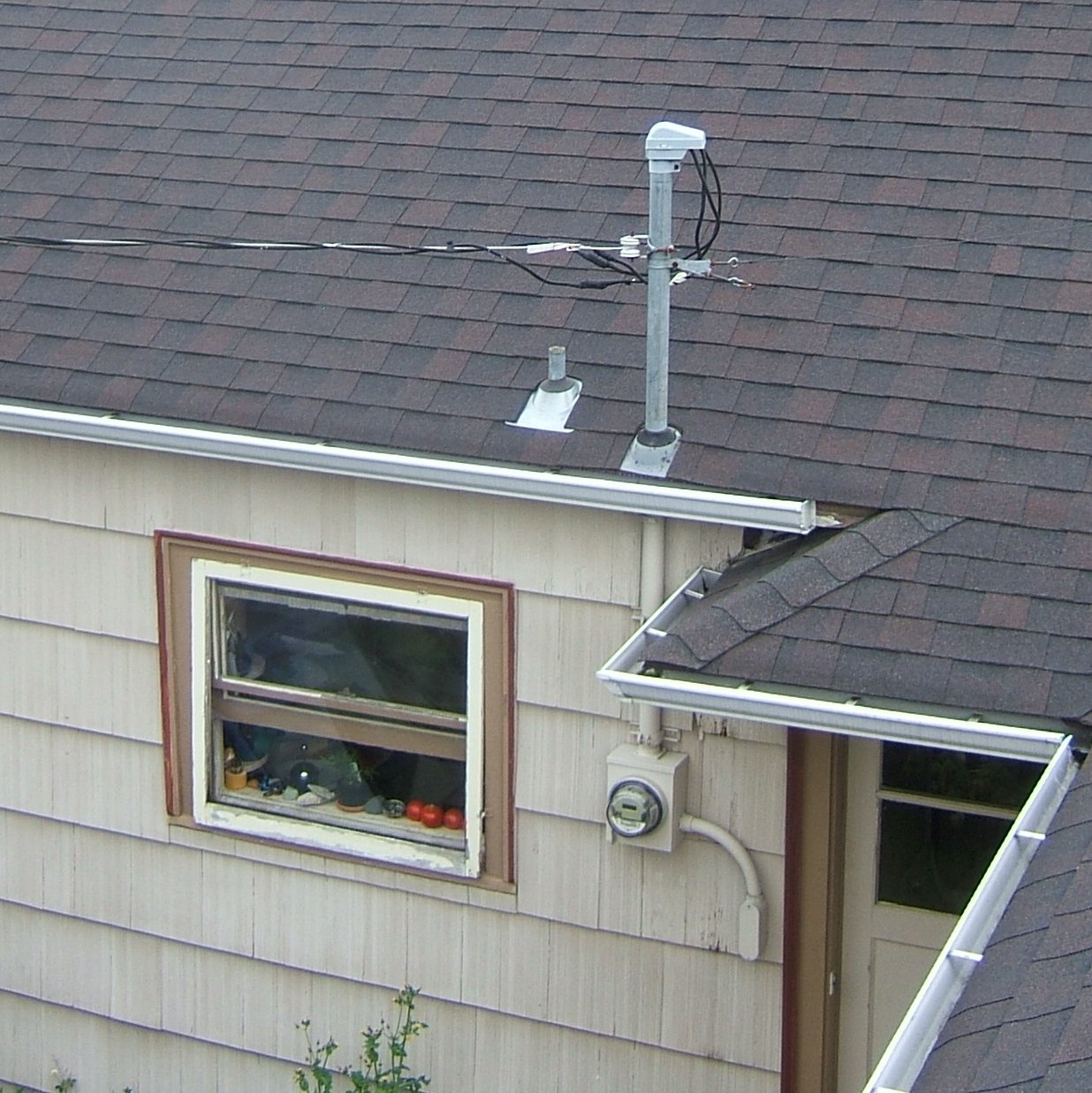
Where the overhead drop arrives, a rigid mast rises through the roof or up the wall to a weatherhead that keeps rain out of the conductors. On a long span the drop pulls hard on that mast in the wind, so it gets braced for the load.
Entrance conductors
The wires running from the weatherhead down to the meter and on into the main are sized for 200 amps. Undersized or brittle old entrance cable is one of the more common things we find when we open up an older service.
Main breaker and panel
The service disconnect moves up to 200 amps, usually in a new panel with spaces to spare. Circuits are moved across and labeled as they land. When the job is the panel alone, our Burns panel installation page covers it.
Grounding and bonding
Ground rods, the grounding electrode conductor and the bonding to metal water piping are brought up to current requirements. On an exposed prairie property, good grounding gives surges a path to earth, and a surge device at the panel does the protecting.
Permit and inspection
A service change requires a permit and inspection. The City of Burns covers properties within town, and the Laramie County building department covers unincorporated land. We do not ask for reconnection until the inspector has signed off.
What Open Prairie Does to a Service Drop
Properties out here often sit a long way from the pole, and the overhead drop spans open ground with nothing to break the wind. That constant movement works on every connection point. A mast that was fine for a short town drop can lean, or crack the roof flashing, under a long span. We size and brace the mast for the pull it will actually see, and we check that the drop clears driveways and equipment paths, especially where a tractor or a stock trailer passes underneath.
Summer thunderstorms bring lightning across the high plains, and an isolated house or barn on open prairie is exposed to it. A sound grounding electrode system gives surges a path to earth, though grounding alone does not stop a strike from doing damage. During an upgrade we also recommend a whole-home surge protective device at the panel, a small addition that shields electronics such as a furnace control board or a well pump controller.
Isaac spent years wiring power systems on federal government contracts in demanding environments, and that background shapes how he builds a rural service, with the grounding and the connections done for the conditions they will face on open land. Photos of past jobs are in our gallery.
Service Upgrade Questions Around Burns
How do I know if I need a 200-amp service?
Common signs are a main breaker that trips under load, lights dimming when big motors start, and a panel with no open spaces. Plans for a shop, a welder, air conditioning or an outbuilding feeder also point that way. A load calculation settles the question before you spend anything.
Who shuts off the power for the upgrade?
Your rural electric cooperative disconnects and reconnects the service, since the line and meter belong to them. We contact them, schedule the disconnect for a day we are on site, and coordinate the reconnect once the inspector approves the new equipment. You do not have to manage the back and forth.
What parts get replaced in a service upgrade?
Typically the meter base, the service mast and weatherhead or underground conduit, the entrance conductors, the main breaker and usually the panel, plus the grounding and bonding. Branch circuits stay in place and move into the new panel, where we label each one as it lands.
Can I add a subpanel instead of upgrading?
Sometimes. A subpanel adds breaker spaces, but it adds no capacity to the service. If the load calculation shows the existing service has room, a subpanel for the shop or barn may be all you need. If the numbers are tight, a subpanel just moves the overload somewhere else.
Does a long overhead drop change the job?
It can. A long span strains the mast in the wind, so the mast needs proper height and bracing, and the drop has to clear driveways and equipment paths. The cooperative may also want to replace the drop itself to match the larger service, and we coordinate that with them.
Why does grounding matter so much on rural property?
Open prairie properties see real lightning, and a good grounding system gives surges a direct path to earth. During an upgrade we bring the rods, the electrode conductor and the bonding up to current requirements, and we usually suggest a whole-home surge protector at the panel for the electronics inside.
Is a permit required for a service upgrade near Burns?
Yes. Properties within Burns town limits go through the City of Burns, and unincorporated properties go through the Laramie County building department. We pull the permit and schedule the inspection, and we do not request reconnection from the cooperative until the new service has passed inspection.
Can you upgrade the power to a barn or shop too?
Yes. Outbuildings are usually fed from the house service or from a meter pole with a feeder to each building. We size those feeders for welders, compressors and lighting, install a subpanel with its own disconnect and grounding, and plan the house upgrade so it can carry them.
Burns Pages for the Rest of the Job
Lining Up an Upgrade From Cheyenne
We come out from our Cheyenne shop, roughly twenty miles along Interstate 80, and take service work across Laramie County, from homes on Main Street to farm buildings off County Road 212. The service areas page shows the rest of the map. Send the address and your photos through the contact page, and we will start the cooperative conversation while we plan the visit.