Electrical Inspections for Fox Farm-College Houses Changing Hands
A master electrician’s walk-through for buyers, sellers and landlords near LCCC, with findings written down in plain language so whoever has to decide can read them and act.
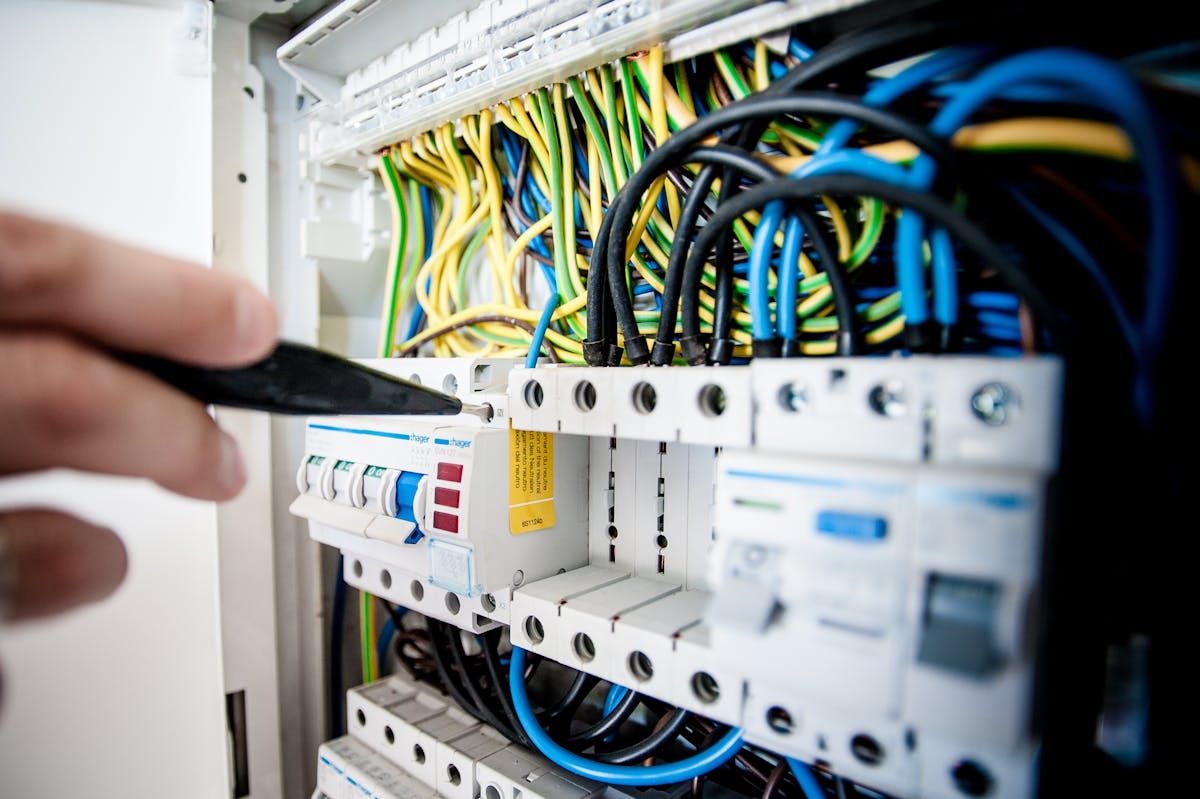
Before You Close on an Older Ranch House
Many of the single-family houses south of Laramie County Community College are ranch homes from the 1970s, with some older and some newer mixed in. They were built well for their era, and most of them have had several decades of owners adding things. A basement finished over a few weekends. An outlet run to the garage with whatever cable was on hand. A ceiling light swapped by somebody who never shut the breaker off and got lucky. None of that shows up in listing photos.
A general home inspection looks at the electrical system along with the roof, the furnace and everything else, and the report often ends with a line recommending further evaluation by a licensed electrician. That line is where we come in. Isaac Garcia holds a Wyoming master electrician license, and his walk-through goes deeper into the panel and the individual circuits than a general inspector has time for in one afternoon.
For a buyer, the point is knowing what you are taking on while the contract still has room to ask the seller for repairs or a credit. For a seller, it is getting ahead of the buyer’s inspector so a surprise in the panel does not stall the sale two weeks before closing. Either way the findings come to you in writing, organized so somebody who has never opened a panel can follow them.
Sellers sometimes worry that an inspection only gives the buyer more to argue about. It tends to work out the opposite way. Fixing the two or three real hazards before listing, then handing over the report with those repairs noted, takes the vague alarm out of whatever the buyer’s inspector writes. A buyer who can read exactly what was found and what was done has far less room to ask for a large credit at the last minute.
We will be direct about what we find, and that includes saying so when a house is in good shape. Plenty of older homes near the college have been kept up well, and a clean report is worth having in hand when you negotiate. The service as we offer it across the area is on our electrical inspections page.
A Checkup for Rentals Between Leases
Landlords near campus see steady turnover, and every move-out is a chance to catch wear before the next tenant finds it. Outlets that have been yanked on for years work loose. Cover plates crack. Someone ran a space heater off a bedroom receptacle all winter, and now it shows heat marks. These are small repairs with the unit empty and much bigger problems as a call in the middle of a February night.
Our rental walk-through covers the same ground as a pre-purchase inspection, with extra attention on what tenants are hardest on. We test GFCI protection in the kitchen and bathrooms, check every receptacle for loose contacts and scorching, and look for extension cords strung where an outlet should have been. If the panel is near the end of its life, you hear that too, so the replacement can be planned for a turnover instead of forced by a failure.
Rental units near the college also collect changes nobody wrote down. A tenant who was handy with tools put in a dimmer, or a doorbell camera got tied into whatever wire was closest to the door. We look for that kind of work on purpose, because the owner usually has no idea it happened until a breaker starts tripping or a switch plate gets warm.
If you manage the property from another town, give us the move-out and move-in dates and tell us how to get a key. We schedule inside the gap, write up what we found, and send it along so you can approve repairs without driving over. Past projects are in the gallery, and more about the area is on the Fox Farm-College page.
Where the Walk-Through Goes
The visit follows the power from where it enters the house to where it gets used. Expect Isaac at the meter and the panel first, then room by room, then out to the garage or any outbuilding. He brings a tester for outlets and ground-fault devices and takes the panel cover off. Nothing gets opened up beyond that without your go-ahead.
Panel and Breakers
We open the panel, check breaker sizes against the wire each one protects, and look for double taps and signs of heat. The make and age of the panel go in the findings too.
Grounding and Bonding
A lot of protection depends on a ground path nobody ever sees. We trace the grounding electrode connection and check the bonding to water and gas piping, because corrosion and old remodels tend to break those quietly.
GFCI Near Water
Kitchens, bathrooms and garages call for ground-fault protection. We press the test button on every device and check the outlets downstream of it, since a GFCI that no longer trips looks exactly like one that still works.
AFCI on Bedroom Circuits
Current code calls for arc-fault protection on bedroom circuits, and most houses from the 1970s went up long before it existed. We note where it is missing and explain what adding it involves, so you can decide on timing.
Outlets and Old Insulation
Receptacles get checked for polarity, grounding and loose contacts. Where conductors are exposed in an attic, a basement or the panel, we look at the insulation, which on older wiring can turn brittle and crack after years of heat.
Garage and Outbuilding Feeds
Detached garages and shops on the bigger lots often got their power from a long run added years after the house. We check how that feed is sized, buried and protected, and whether the building has its own grounding.
Fix It Now or Write It Down
Not everything on an inspection report has to happen this week, and we sort the findings that way. Anything that is a fire or shock hazard today sits at the top: a breaker too large for its wire, a scorched receptacle, a panel with no working ground, a connection warm to the touch. We recommend fixing those before anyone moves in, and we can usually handle them during the visit or soon after.
The second group covers items worth doing that are not urgent. Adding arc-fault protection to bedrooms in a house built without it belongs here, and so does an aging panel that is still working for now. We describe those plainly so a buyer or an owner can plan and budget for them over the next year or two.
The last group is simply information. You learn the service size, where the main shutoff is, which breaker feeds what, and how much the house could support if you add air conditioning or a car charger later. Buyers tend to find that part as useful as the repair list, because it answers questions they did not know to ask.
We keep the inspection and any repair work separate on paper, so you can take the findings to whoever you like. Most people ask us to do the work, though the report stands on its own either way.
Inspection Questions We Hear Most
How is this different from my home inspector’s report?
A general home inspector covers the whole house in a few hours, so the electrical section stays near the surface. We spend that time on the panel, the grounding and the individual circuits, and we test devices instead of only looking at them.
Is this the same as a permit inspection?
No. A permit inspection happens when new work is installed, done by whichever authority covers the address. Ours is an evaluation of the existing system by a master electrician, done on your behalf so you know where the house stands.
What do I get at the end?
Written findings sorted by urgency, in plain language, with the cost in writing for any repairs we recommend. You can forward it to an agent, a lender, a co-owner or a landlord without having to explain the terms yourself.
Does the house need to be empty?
No. We work in occupied homes all the time. For rentals, the stretch between tenants is the easiest window because we can reach every outlet without moving furniture, though it is not a requirement for the visit.
Will you look at the detached garage too?
Yes, if you want it included. We check how the garage or shop gets its power, whether the feed is sized and protected properly, and whether the building has its own grounding the way it should.
If you find problems, do I have to hire you to fix them?
No. The findings are yours to use however you like. Most clients do ask us to handle the repairs, and we can often take care of the urgent items soon after the walk-through, but the choice stays with you.
My house is from the 1970s. What usually turns up?
Missing ground-fault protection in kitchens and baths, no arc-fault protection on bedrooms, crowded panels and receptacles worn loose are the regulars. Every house differs, so we report what is actually there instead of a checklist answer.
Can you inspect the house if I live out of state?
Yes. An agent or a property manager can let us in, and we send the written findings to you directly. If you want to go through them together, we can talk by phone while you have the report open in front of you.
Other Services for the LCCC Neighborhood
Booking the Walk-Through
Our office is in Cheyenne, just up the road from the college. If a purchase contract gives you an inspection deadline, tell us the date when you call (307) 757-5553 so we can fit the visit inside it. You can also send the address and the deadline through our contact form, or see what else we cover across Laramie County.