Retiring the Old Fuse Box, One Labeled Breaker at a Time
Burns homes and farm buildings still running on a fuse box or a crowded original panel, rebuilt around a modern breaker panel with room to grow. We feed subpanels out to barns and shops, label every circuit, and handle the permit with the town or the county.
When the Fuse Box Finally Has to Go
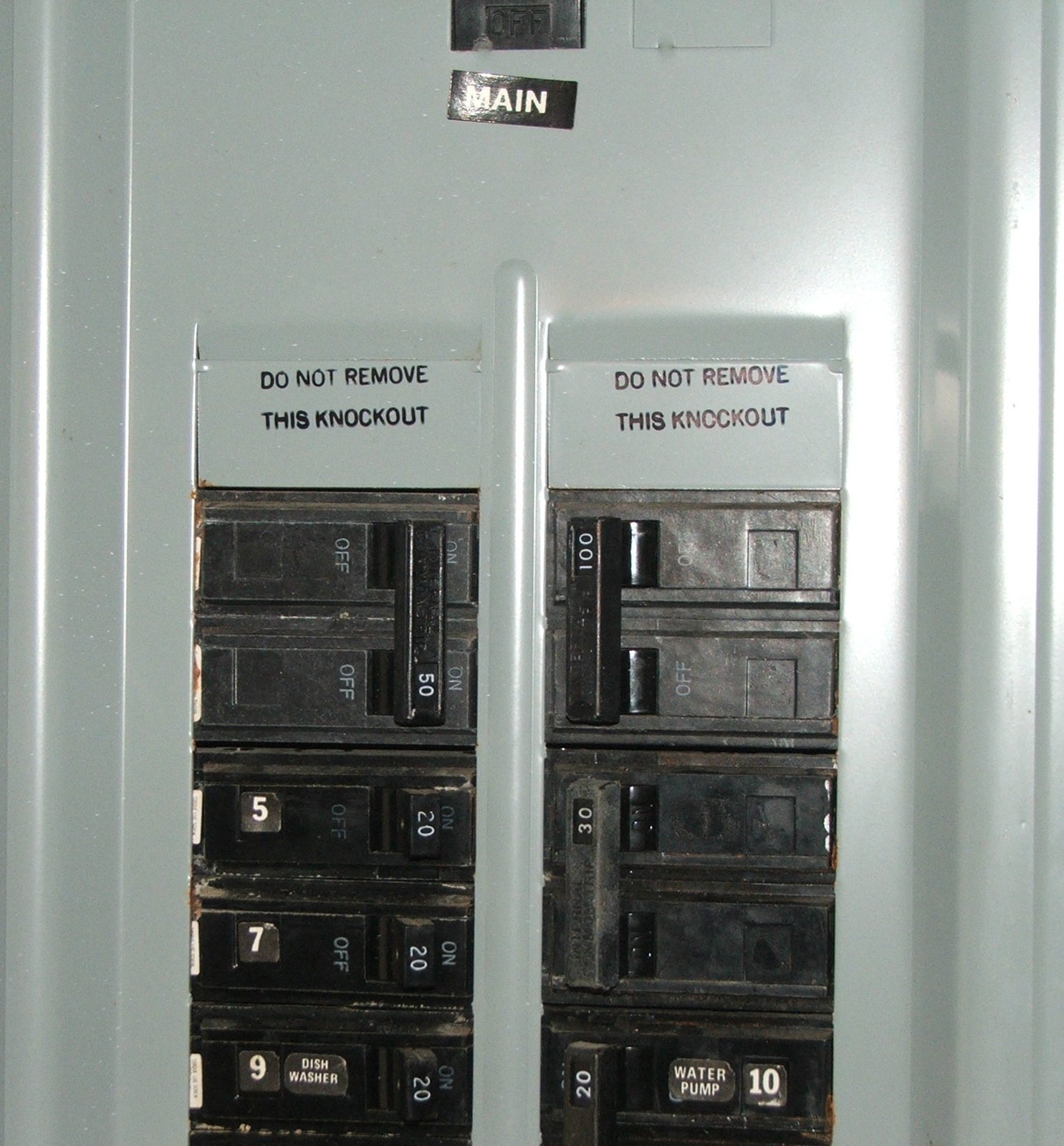
Plenty of houses in Burns were wired once and then added to for decades, and the panel is where that history piles up. Some still have a fuse box with screw-in plugs behind a metal door. Others have an original breaker panel so full that two wires share one breaker screw and thin tandem breakers fill every slot. Neither was built for a well pump, a chest freezer, a window unit and a shop compressor all asking for power on the same afternoon.
Most of what we find comes down to heat. A fuse that kept blowing gets swapped for a bigger one, and now the wire behind it can carry more current than it was sized for with nothing to stop it. A breaker that never seated tightly scorches the bus bar it clips onto. None of that shows from the outside of the door, which is why Isaac pulls the cover and looks before he talks about anything else.
Location gets settled on the same visit. Older panels often sit in a back closet, behind a washer, or on the wall of a cold mudroom or attached garage. A garage or mudroom can be a good home for a new panel if it stays dry, keeps a clear space in front wide and deep enough to stand and work, and nobody plans to stack shelving against it later. Frost on the cover and roof drips are what we design around. If the old spot breaks the clearance rules, we move the panel and extend the circuits to reach it. Our panel installation page covers this work across the area, or ring (307) 757-5553.
A New Panel and a Bigger Service Are Separate Jobs
People often call asking for a panel upgrade when they mean one of two different projects. Replacing the panel swaps the box inside the house: the bus, the breakers, the main breaker, the neutral and ground bars. The amount of power coming in stays the same. A 100-amp house with a new panel is still a 100-amp house, only safer and far better organized.
A service upgrade changes how much power the house can draw, and much of that work happens outside. It involves the equipment that brings power to the panel and coordination with the cooperative on its side of the connection. We cover that side on our Burns electrical service upgrade page. This page stays with the panel itself.
So which one do you need? We start with a load calculation: what the house runs now, what you plan to add, and whether the existing service carries it. If the well pump, furnace, range and dryer all fit with room left, a new panel at the current size is the right answer. If a welder, an air conditioner or a heated shop is on the list, doing both at once lets the new panel be sized for the bigger service from the start. Either way, the price comes after Isaac has walked the property and counted the circuits.
What Goes Into the New Box
Breakers matched to the wire
Each breaker is sized to the gauge of the wire it protects, so the cable trips off before it overheats. Where an old fuse was oversized to stop the nuisance blowing, the new breaker goes back down to what the wire can carry, and we find out why that circuit was overloaded.
Arc-fault and ground-fault protection
Code calls for arc-fault protection on many living-space circuits and ground-fault protection near water, in garages, outdoors and in unfinished spaces. As circuits land in the new panel, we add that protection where the current code asks for it, often with combination breakers.
A directory anyone can read
Every circuit gets a written label naming the room and the load: kitchen counter left, furnace, garage freezer, shop outlets. The well pump gets its own clear line, because that is the breaker you will want in a hurry. A future owner, or you at night with a flashlight, should never have to guess.
Spaces left open
We leave empty slots for what is coming, whether that is a heated stock tank, a car charger or a feeder to the shop. A panel filled to its last space on the first day puts you right back where the old one left off.
Surge protection at the panel
Burns sees intense lightning in summer thunderstorm season, and rural lines carry their share of power fluctuations. A surge protective device mounted at the panel helps shield appliances and electronics downstream, and it goes in easily while the cover is already off.
Grounding confirmed in person
The new panel ties into the home’s grounding system, and we confirm the ground rod and water pipe bond are actually connected and intact. On an exposed prairie lot, a grounding connection that rusted loose years ago is something we would rather find now.
Feeding a Subpanel Out to the Barn or Shop
Barns, shops and equipment sheds around Burns tend to start out with an extension cord and one bulb, and then the welder shows up. A subpanel gives the outbuilding its own breakers, so a tripped circuit in the shop gets reset in the shop, without a walk back to the house in blowing snow. We feed it from the house panel or from the power pole, depending on where power comes in and where the building sits.
The feeder is sized to what the building will actually do, with some margin. Lights and a few outlets in an equipment shed need far less than a shop with a welder, an air compressor and a space heater going together. The run is buried in conduit or carried overhead, and on a long run we step the wire size up so the voltage at the far end holds steady when a motor starts.
Inside the outbuilding, the subpanel keeps neutrals and grounds on separate bars, and the building gets a grounding electrode of its own. If the wiring inside the barn needs work too, our Burns wiring services page covers that side. Photos of finished work are in our gallery.
Panel Questions From Burns Homeowners
Do I need a permit to replace my panel in Burns?
Yes. A panel replacement needs a permit and an inspection. Inside the Burns town limits the City of Burns handles it, and outside town the Laramie County building department does. We file the permit, schedule the inspection, and coordinate the shutoff so you know when the power will be off.
Is my fuse box dangerous?
Not automatically, though most are well past their best years. The real hazards are oversized fuses, worn fuse holders, and wire that has overheated behind them. A fuse box also offers no arc-fault or ground-fault protection. We open it up, show you what we find, and the decision stays with you.
Will a new panel give me more power?
Only if the service grows with it. A new panel at the same amperage makes the house safer and adds breaker spaces, while the power coming in stays the same. If your load calls for more, we pair the panel with a service upgrade and size the two together.
Can you run a subpanel to my barn from the house?
Usually, yes. We can feed a barn, shop or equipment shed from the house panel or from the power pole, whichever makes the more practical run. The feeder is sized to the building’s load, and the subpanel gets its own grounding plus separate neutral and ground bars.
What should the circuit labels on my panel say?
The room and the load, written plainly. Bedroom outlets east wall, kitchen counter right, furnace, garage freezer. We trace every circuit as we move it and write a directory a stranger could follow. The well pump always gets its own clearly marked line on that list.
Can my panel go in the garage or mudroom?
Often it can. The spot has to stay dry, sit clear of anything that drips or floods, and keep open working space in front of the panel that nobody fills with shelves or storage. If the current location fails those rules, we move the panel and extend the circuits to it.
Why would a new panel need arc-fault breakers?
Arc-fault breakers watch for the small sparking that comes from damaged cords, loose connections and nicked cable, which can start a fire inside a wall. The current code calls for them on many living-space circuits. As circuits move into a new panel, we add that protection where the code requires it.
Can you add surge protection while the panel is open?
Yes, and it is the easiest time to do it. A surge protective device mounts at the panel and helps shield appliances and electronics from spikes on the line. With summer lightning on the open prairie and fluctuations on rural lines, many homeowners add one during the swap.
The Rest of the Burns Lineup
Setting Up a Look at Your Panel
The shop is in Cheyenne, and Burns sits about 20 minutes east along Interstate 80, so we are out this way regularly while working across Laramie County. The wider map is on the service areas page, and the Burns page covers the rest of our work in town and on the ranches around it. Send a photo of the panel and your address through the contact page, and we will find a time to open it up with you.